What If I Had Invested… (Part 5): Regret, Timing, and the Power of Staying In
By Ogechi Aguma ·

What If I Had Invested… (Part 5): Regret, Timing, and the Power of Staying In
Every investor, at some point, has whispered the same question: “What if I had just invested back then?” Whether it’s 2010, 2015, or even last year — that question carries equal parts regret and curiosity. But the truth hidden behind it is more human than mathematical.
The myth of perfect timing
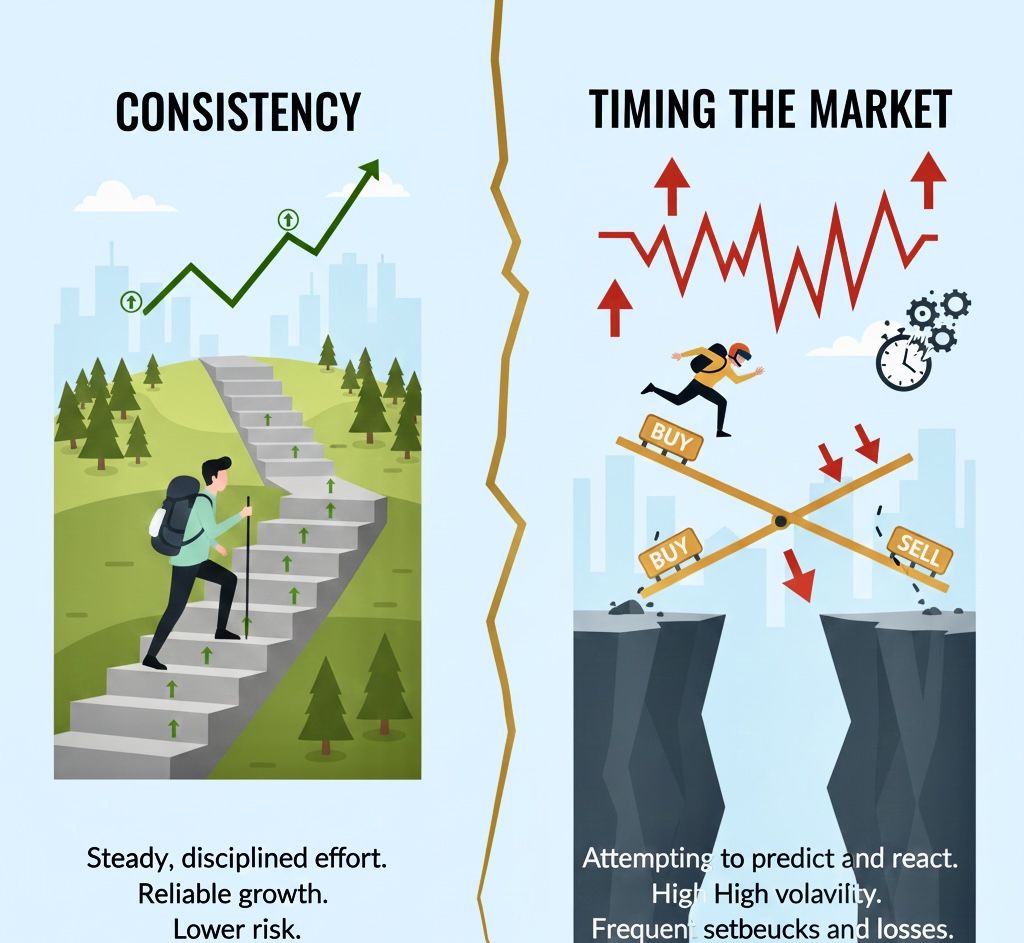
The fantasy of investing is timing — buying low, selling high, and catching the market’s rhythm with flawless precision. In reality, even professional fund managers rarely get it right. The emotional cost of chasing the perfect entry is often higher than any market downturn.
Research from JP Morgan shows that if you missed just the 10 best days in the market over a 20-year period, your returns could drop by more than half. And those best days often occur right after the worst ones. Which means, ironically, that the investor who stays scared on the sidelines loses the most by doing nothing.
Regret as an investing teacher
Regret is one of the most powerful emotions in finance. It drives panic selling, missed opportunities, and hesitation — but it can also teach humility. Every investor who has ever thought “I should have bought” has also learned the quiet truth of markets: wealth doesn’t grow in moments, it grows in time.
The antidote to regret is not perfection — it’s participation. The act of staying invested, of committing to a plan even when headlines scream uncertainty, is what transforms hesitation into discipline.
The power of staying in
If there is one universal truth in investing, it’s this: the market rewards time, not timing. The investor who starts early and stays consistent, even through crises, nearly always outperforms the one waiting for the “right moment.”
The reason is behavioural. Humans feel losses twice as strongly as equivalent gains — a concept known as loss aversion. So we delay action to avoid feeling pain. But in investing, waiting for certainty is the costliest form of risk.
The quiet winners are not the boldest traders but the calmest holders — those who stayed invested through recessions, pandemics, and political noise.
The emotional dividend
Over time, investors who stay in the market not only earn financial returns — they earn psychological returns. Each year of commitment builds resilience, and resilience compounds just like capital. The emotional dividend of patience is confidence — the quiet conviction that the future rewards discipline.
In the end, investing is less about predicting tomorrow and more about honouring time today.
Final reflection
“What if I had invested?” is really another way of asking, “What if I had believed in my future sooner?” The most powerful moment to act is always now — not perfectly, not fearlessly, but consistently.
Series Wrap-Up — The Journey of “What If I Had Invested…”
Over five chapters, this series traced the simple yet profound truth of wealth creation: that time, not timing, shapes success. Whether through the explosive decade of technology, the steady hum of the FTSE 100, or the quiet discipline of monthly investing, one message endures — compounding begins the moment belief replaces hesitation. The best story about your financial future is the one you start writing today.
This guide is general education, not financial advice. Investments can fall as well as rise. If you are unsure, speak to a regulated financial adviser.