Rachel Reeves’ Budget 2025: Full Breakdown, Key Changes & What It Means for Your Money
By Ogechi Aguma ·
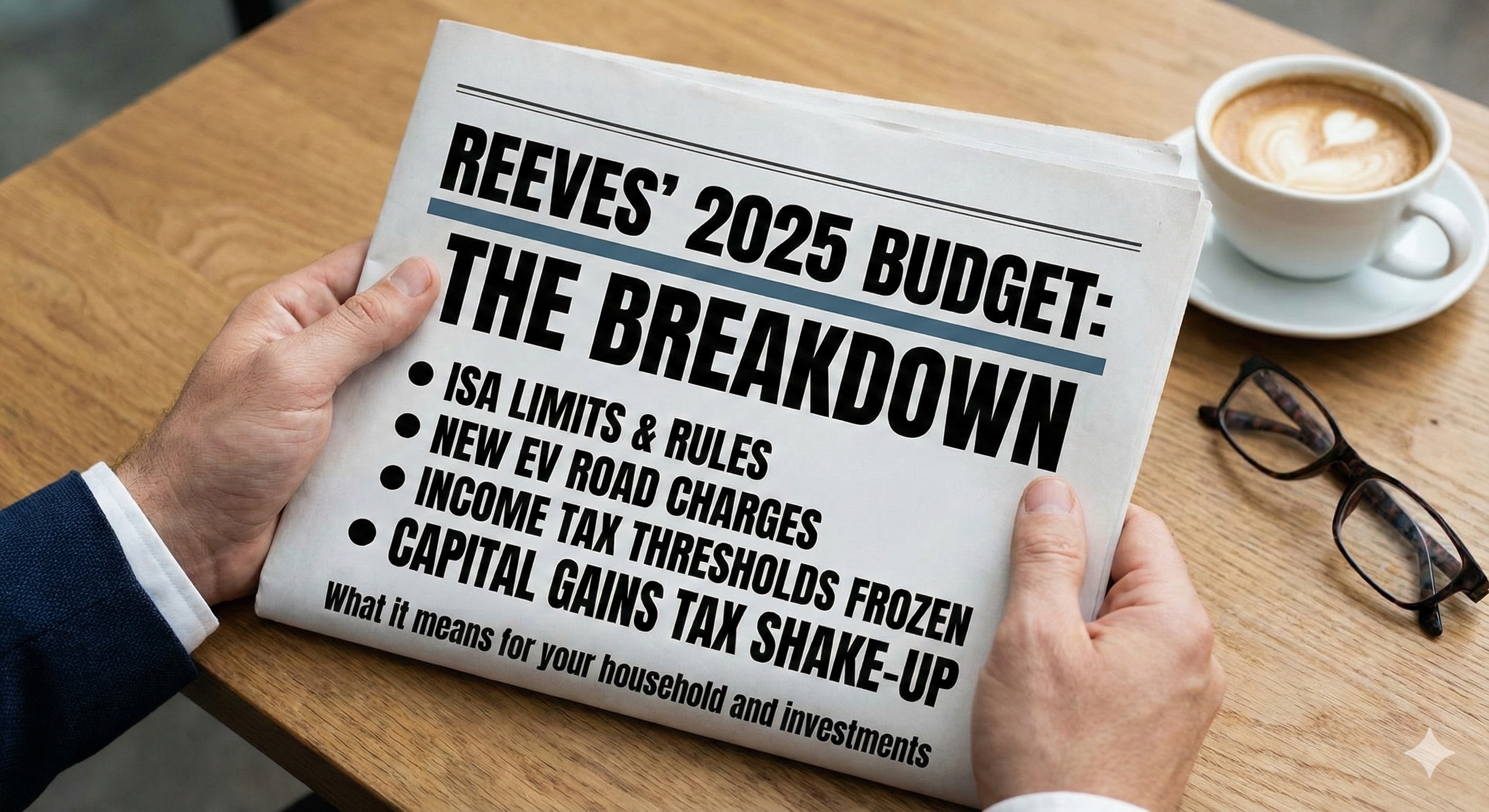
Rachel Reeves’ Budget: Full Highlights, Analysis & What It Means for Households and Investors
The latest budget from Chancellor Rachel Reeves marks a decisive shift in the government’s economic approach — focusing on revenue stability, long-term investment and targeted taxation. While some policies offer continuity and reassurance, others introduce new financial pressures for households, investors and motorists. This article breaks down the key announcements, their wider implications, and what they mean for everyday financial planning.
1. ISA Allowances – Stocks & Shares ISA Remains at £20,000
Despite speculation earlier this year, the government confirmed that the annual allowance for the Stocks & Shares ISA remains £20,000. This is significant given the rising number of investors using ISAs as a tax-efficient shelter from capital gains tax and dividend tax.
What this means for savers:
- Your full £20,000 tax-free investment allowance remains untouched.
- All gains, dividends and interest inside the ISA remain free from tax.
- With threshold freezes elsewhere, ISAs now matter more than ever for reducing long-term tax exposure.
The government’s decision not to reduce the allowance signals a recognition that long-term investment incentives are crucial for household financial resilience.
2. Electric Vehicle (EV) Motoring – New 3p Per Mile Charge
As expected, the government announced the introduction of a 3p per mile road usage charge for electric vehicles. This move compensates for declining fuel duty revenue as EV adoption increases.
Key implications:
- EV running costs will rise — especially for drivers with high annual mileage.
- The long-term cost gap between EVs and petrol cars continues to narrow.
- Home charging is still significantly cheaper than public charging, but overall savings are shrinking.
This signals the beginning of a structural shift in how the UK funds its road network: consumption-based taxation.
3. Child Benefit – Two-Child Cap Maintained
The budget confirmed no change to the existing two-child limit on child benefit payments. Families will continue to receive support for only the first two children.
Wider impact:
- The cap remains one of the most contentious welfare policies in the UK.
- No additional financial support for larger families was reintroduced or expanded.
- The policy forms part of a wider focus on targeted, not universal, benefits.
4. Frozen Income Tax Thresholds – Stealth Tax Continues
All major income tax thresholds, including the personal allowance, remain frozen. With wage inflation still present, more taxpayers will continue to drift into higher tax bands — a process known as fiscal drag.
This means:
- You could pay more tax even if your real income hasn’t increased.
- More workers will be pulled into the 40% tax bracket.
- Take-home pay may feel tight despite salary increases.
5. High Earners – No Relief, No Change
The 45% additional rate remains fixed at £125,140. No reliefs, allowances or thresholds have been adjusted for higher earners.
- Freezing the threshold increases tax receipts from senior professionals.
- No changes to dividend tax or CGT thresholds for higher earners.
- More people will enter the additional rate as wages rise.
6. Fuel Duty Freeze – Stability at the Pump
Despite pressure to increase revenue, the government opted to keep fuel duty frozen. For motorists, this prevents immediate increases in diesel and petrol prices.
This freeze ensures:
- Short-term price stability during economic uncertainty.
- No additional burden for industries reliant on road transport.
- A gradual, rather than abrupt, transition into new motoring charges.
7. Public Spending, NHS & Infrastructure
The budget reaffirmed capital expenditure commitments in the NHS, road networks, digital infrastructure and transport upgrades. However, fiscal constraints mean that delivery will be staged and prioritised.
Key sectors highlighted:
- NHS estates modernisation
- Transport connectivity and rail investment
- Digital readiness & broadband expansion
- Green energy transition planning
8. Business Taxation – Stability but No Major Incentives
No changes were introduced to corporation tax rates. While this provides stability for businesses, many had expected investment incentives or allowances.
Notable points:
- Corporation tax holds steady.
- No new deductions or allowances for capital investment.
- Future reviews were mentioned but without clear timelines.
Final Thoughts
Rachel Reeves’ budget reflects a cautious yet assertive attempt to stabilise public finances. The key challenge is clear: raising revenue without derailing growth. For households, tax pressure will build gradually through threshold freezes and new EV charges. For investors, the unchanged £20,000 ISA allowance remains one of the strongest tools for preserving long-term returns in a tightening tax environment.
Follow Shares Investment Lifestyle for deeper financial insights:
“It’s more than money, it’s a lifestyle.”
Financial Disclaimer:
This article is for informational purposes only and should not be taken as financial advice.
Investments carry risk. Always seek professional advice before making investment decisions.
This guide is general education, not financial advice. Investments can fall as well as rise. If you are unsure, speak to a regulated financial adviser.