Money Mindset · Economy & Policy
The Quiet Thief: How Inflation Slowly Steals Your Wealth
By Ogechi Aguma ·

The Quiet Thief: How Inflation Slowly Steals Your Wealth
A Story About Two Retirements
After nearly four decades of work, David finally retired at the age of 65. He had done everything he believed a responsible person should do. He worked diligently, saved consistently, avoided unnecessary debt, and built a retirement portfolio worth £1.2 million.
His plan was simple. He would withdraw money each year, enjoy retirement, travel occasionally, and live comfortably. After all, £1.2 million sounded like more than enough.
His friend Michael retired around the same time with a similar amount of money. However, Michael made one small but significant decision: he chose to keep most of his retirement funds invested, withdrawing only what he needed each year.
At first, both men felt equally secure. But over the next twenty years, their financial stories began to diverge. The reason was something many people underestimate: inflation.
Story One: David and the Illusion of a Million Pounds
David was cautious. When he retired, he moved most of his money into cash and low-risk savings accounts. “I'm retired now,” he told himself. “I don't want to risk losing my money in the markets.”
So he withdrew about £45,000 per year from his savings to fund his lifestyle. For the first few years, everything felt comfortable. But inflation was quietly working in the background.
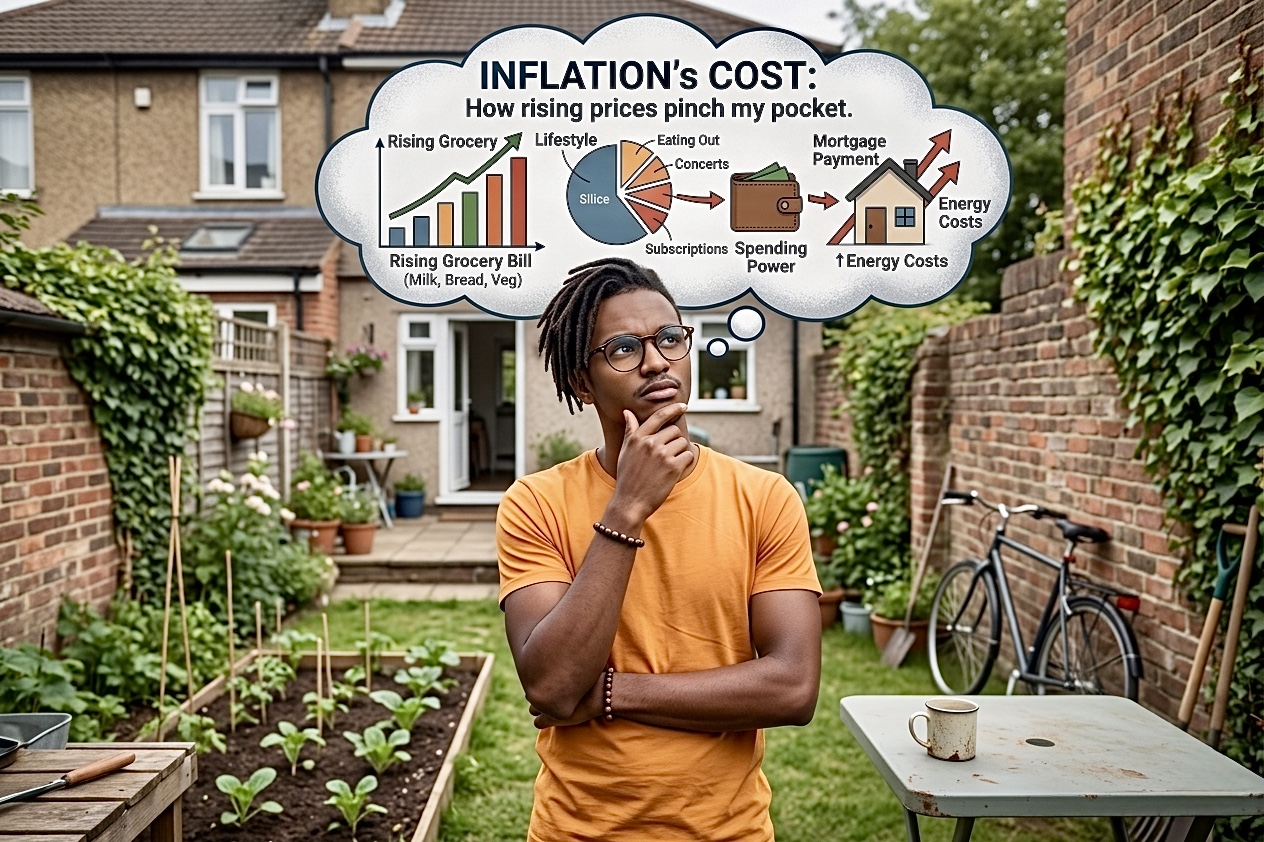
Groceries became more expensive. Energy bills crept higher. Travel costs increased. Dining out slowly became pricier. None of these increases felt dramatic individually. But over time they accumulated.
If inflation averages 2.5% per year, prices roughly double every 28 years. Ten years into retirement, David began to notice something unsettling. The £45,000 that once felt comfortable no longer stretched as far.
By year fifteen, he had to reduce travel and discretionary spending. By year twenty, his savings had fallen significantly, and his lifestyle had quietly shrunk. David had done everything right — except for one thing. He underestimated how powerful inflation could be over time.
Story Two: Michael and the Power of Staying Invested
Michael faced the same decision when he retired. He also had roughly £1.2 million. But instead of moving everything into cash, he adopted a different strategy.
He kept a large portion of his money invested in diversified global equities and index funds, while maintaining some cash for short-term needs. Each year he withdrew roughly 4% of his portfolio.
At first glance, his approach appeared riskier than David's. Markets move. Prices fluctuate. Headlines create uncertainty. But over time something remarkable happened.
While Michael was withdrawing money, his portfolio continued growing. Companies around the world increased profits. Markets expanded. Dividends were reinvested. More importantly, corporate revenues often rise with inflation.
Twenty years later, Michael's portfolio had not disappeared. In fact, in many scenarios, it remained close to its original value or even higher, depending on market returns. His withdrawals adjusted with inflation, allowing his lifestyle to remain largely intact.
The difference between the two men was not discipline. Both were disciplined savers. The difference was how their money behaved after retirement.
Story Three: The Retired Teacher
Consider another example. Sarah was a teacher who retired with £800,000 in pension savings. She assumed that was more than sufficient. After all, £800,000 sounds like a large number.
But she overlooked a simple fact. Inflation does not care how large your savings appear today. If inflation averages 3% annually, the purchasing power of money changes dramatically over time.
In roughly 24 years, prices can double. That means something that costs £30,000 per year today could cost £60,000 in the future. Sarah eventually realised something important: retirement planning is not just about how much money you have. It is about how long that money can maintain its purchasing power.
Story Four: A Different Kind of Retirement
Now consider James. James also retired with around £1 million. But he understood one simple principle: money sitting still slowly loses its strength.
So he designed his retirement portfolio with three elements:
- Growth assets (such as global equities)
- Income assets (dividends and distributions)
- Liquidity (cash for short-term spending)
His withdrawals were structured carefully. Instead of withdrawing randomly, he followed a disciplined drawdown strategy. The result was a retirement plan designed not just for today — but for the next 20 to 30 years.
What Inflation Really Does
Inflation is often described in small numbers: 2%, 3%, 4%. These percentages appear harmless. But over long periods, they quietly reshape financial reality.
At 2.5% inflation:
- £1,000,000 today may feel like £790,000 in 10 years
- About £624,000 in 20 years
- Roughly £493,000 in 30 years
The number in your bank account may remain the same. But what that number can buy steadily declines. This is why inflation is sometimes called the silent tax on savings.
Practical Steps to Protect Your Wealth
Understanding inflation is the first step. Responding to it thoughtfully is the next. Some investors consider the following approaches:
1. Maintain Exposure to Growth Assets
Equities historically have the ability to grow faster than inflation over long periods.
2. Diversify
Holding a mix of assets can help reduce reliance on any single investment outcome.
3. Plan for a Long Retirement
Retirement may last 20 to 30 years or more.
4. Review Withdrawal Rates
A structured withdrawal strategy can help balance income needs with long-term sustainability.
5. Stay Informed
Understanding economic trends — including inflation — can help individuals make better long-term decisions.
The Real Lesson
The goal of saving is not simply to accumulate money. It is to preserve and grow purchasing power over time. David and Michael both saved diligently. But their retirement experiences differed because of how they positioned their wealth against inflation.
Inflation is not dramatic. It does not arrive suddenly. Instead, it works slowly, quietly, year after year. And over decades, its effects can be profound. Understanding it may be one of the most important lessons in long-term wealth building.
It's more than money, it's a lifestyle.
This article is for educational and informational purposes only and should not be considered financial advice. Investing involves risk and the value of investments can go down as well as up. Past performance does not guarantee future results. Always conduct your own research or consult a qualified financial adviser before making investment decisions.
This guide is general education, not financial advice. Investments can fall as well as rise. If you are unsure, speak to a regulated financial adviser.