How Teenagers in the UK Can Start Investing: A Complete Beginner’s Guide
By Ogechi Aguma ·
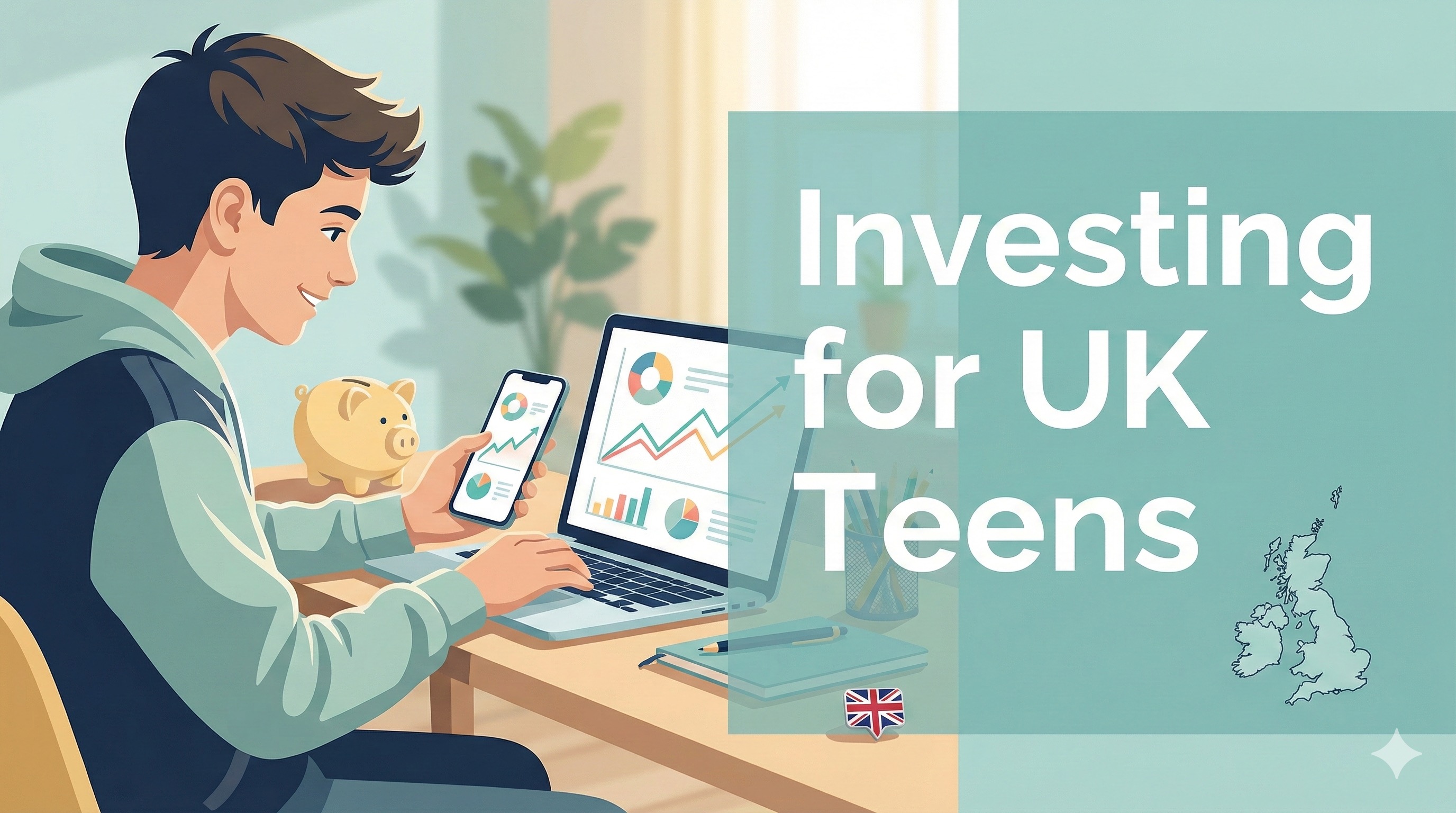

How Teenagers in the UK Can Start Investing
Shares Investment Lifestyle — It’s more than money, it’s a lifestyle.
A Complete Beginner’s Guide — simple steps for UK teens
Summary: This guide explains what investing is, why starting early matters, the legal age to open accounts in the UK, step-by-step actions for an 18-year-old beginner, how to make part-time wages work, practical portfolio examples, projections for regular saving, and how investing can help you buy a first home.

Teen investing illustration — Shares Investment Lifestyle
1. What does investing really mean?
Investing means putting money into something today with the aim of growing it over time. Examples include owning small parts of companies (stocks), lending to governments or companies (bonds), or buying a basket of assets (funds or ETFs).
2. Why teenagers should start early
- Compounding: returns generate more returns over time.
- Small amounts add up: consistent monthly contributions matter more than timing.
- Good financial habits: discipline and long-term planning.
3. UK legal ages & account types
Under 18: you can’t open a normal investment account in your name, but a parent can open a Junior ISA for you.
At 18: you can open a Stocks & Shares ISA, a General Investment Account (GIA), and a Lifetime ISA (LISA) for a first home (if eligible).
4. If you're 18 — step-by-step to start investing
- Decide your goal: first home, study fund, long-term wealth?
- Choose an account: a Stocks & Shares ISA is usually best for tax-free growth.
- Pick a platform: beginner-friendly options include Trading 212, Hargreaves Lansdown, and Revolut. (These are examples; research fees and suitability.)
- Verify and fund: set up the account, verify identity and deposit your first sum.
- Choose investments: low-cost index funds or ETFs are ideal for beginners.
- Set a plan: automate monthly contributions (e.g., £50–£200/month).
- Review annually: check progress but avoid frequent trading.
5. What to invest in (beginner portfolios)
Keep it simple and diversified. Suggested beginner-friendly approaches:
100% global index fund (example: FTSE Global All Cap).
80% Global Stock Index Fund + 20% S&P 500 ETF.
Why index funds/ETFs? Low fees, built-in diversification and they avoid the need to pick single companies.
6. Making minimum wage (example plan)
If you earn part-time and live with parents, your expenses can be low. Example monthly allocation for a £500/month income:
| Category | Amount | Purpose |
|---|---|---|
| Essentials | £150 | Transport, small needs |
| Emergency savings | £100 | Buffer for surprises |
| Investing | £100 | Into Stocks & Shares ISA |
| Enjoyment | £150 | Food, social life |
7. Realistic return projections — what could £100/month do?
Assume an average annual return of 7% (historic equity-style long-term average; not guaranteed). Results are illustrative only:
| Period | Monthly amount | Total invested | Estimated value (7% p.a.) |
|---|---|---|---|
| 12 years (age 18–30) | £100 | £14,400 | ~£22,500 |
| 22 years (age 18–40) | £100 | £26,400 | ~£62,000 |
| 32 years (age 18–50) | £100 | £38,400 | ~£140,000 |
Increase monthly savings or invest at higher rates and results grow significantly. These are illustrative compounding examples, not a forecast.
8. Could this help buy your first home?
Yes — a Lifetime ISA (LISA) can help first-time buyers: contribute up to £4,000/year and receive a 25% government bonus (up to £1,000/year). Use a LISA for your deposit and a Stocks & Shares ISA for additional growth.
9. Mindset: how to think like a long-term investor
- Long-term thinking: investing is for years and decades.
- Discipline: set up regular automated contributions.
- Ignore noise: avoid being swayed by short-term market headlines or hype.
10. Practical example — "Tyler's journey"
Scenario: Tyler, 18, earns £450/month, invests £100/month in a global ETF via a Stocks & Shares ISA and stays consistent. Over decades, compounding can create a meaningful nest egg — the power comes from time, consistency and staying invested during market cycles.
How to open an account (quick checklist)
- Choose a platform (compare fees and reviews).
- Select Stocks & Shares ISA (or LISA if saving for a first home).
- Verify identity (ID and address usually required).
- Deposit your initial amount (even £10 – £50 is fine).
- Pick a simple ETF or index fund and set monthly contributions.
Which platforms are easy for beginners?
Examples often used by beginners include: Trading 212, Hargreaves Lansdown, and Revolut. Evaluate each platform’s fees, ISA support and educational resources before choosing. (These are examples — always confirm current fees and terms.)
Quick checklist for any teenager starting today
- Decide a clear goal (home, education, long-term wealth).
- Open a Stocks & Shares ISA at 18 (or Junior ISA before then).
- Prioritise low-cost index funds or ETFs.
- Set automatic monthly contributions.
- Keep an emergency buffer outside your investment account.
Conclusion
Starting early gives you a big advantage. With consistent small monthly contributions, a simple diversified portfolio and the right mindset, teenagers in the UK can build meaningful wealth over time — and be better prepared for milestones like buying a first home.
Shares Investment Lifestyle — It’s more than money, it’s a lifestyle.
Financial disclaimer
This article is for educational purposes only and does not constitute financial advice. Investing involves risk and your capital is at risk. Past performance is not a reliable indicator of future results. Always research platforms, funds and your personal tax position before investing. Consider consulting a qualified financial adviser for personal advice.
© Shares Investment Lifestyle — All rights reserved.
This guide is general education, not financial advice. Investments can fall as well as rise. If you are unsure, speak to a regulated financial adviser.