Silver, AI and Memory: The Industrial Metal Behind Modern Computing
By Ogechi Aguma ·
Introduction
Silver has long been known as a precious metal — valued for jewellery, historical monetary use, and aesthetic appeal. But over the past few decades, its role has shifted significantly. Today, more than half of the world’s silver demand comes from industrial applications, and a growing share of that is tied to modern electronics, semiconductors, and large-scale computing infrastructure that supports artificial intelligence (AI).
This article explores how silver’s unique physical properties make it indispensable in high-performance electronics and how the rise of AI and memory-intensive computing is influencing industrial demand.
Why Silver Matters in Technology
The Metal’s Unique Physical Properties
Silver is remarkable for two principal qualities:
- Highest electrical conductivity of any element on the periodic table
- Highest thermal conductivity among common metals
These properties make silver particularly efficient at transferring electricity and dissipating heat — attributes that are vital in modern electronic systems where efficiency and heat management are critical.
In everyday devices, these traits may seem invisible. But in high-performance computing — such as AI servers and advanced memory systems — even small gains in conductivity and heat dissipation can significantly improve performance and reliability.
Silver in Electronics and Memory Systems
Electronic Components and Circuitry
Silver is used extensively in:
- Printed circuit boards
- Electrical contacts and switches
- Conductive inks and adhesives
- Semiconductor packaging
In 2023, the electronics manufacturing sector consumed more than 445 million ounces of silver, making it one of the largest industrial applications for the metal.
Every modern electronic device — from smartphones and laptops to industrial computers — contains silver. In a typical smartphone, around 200–300 milligrams of silver is used in circuitry and connectors.
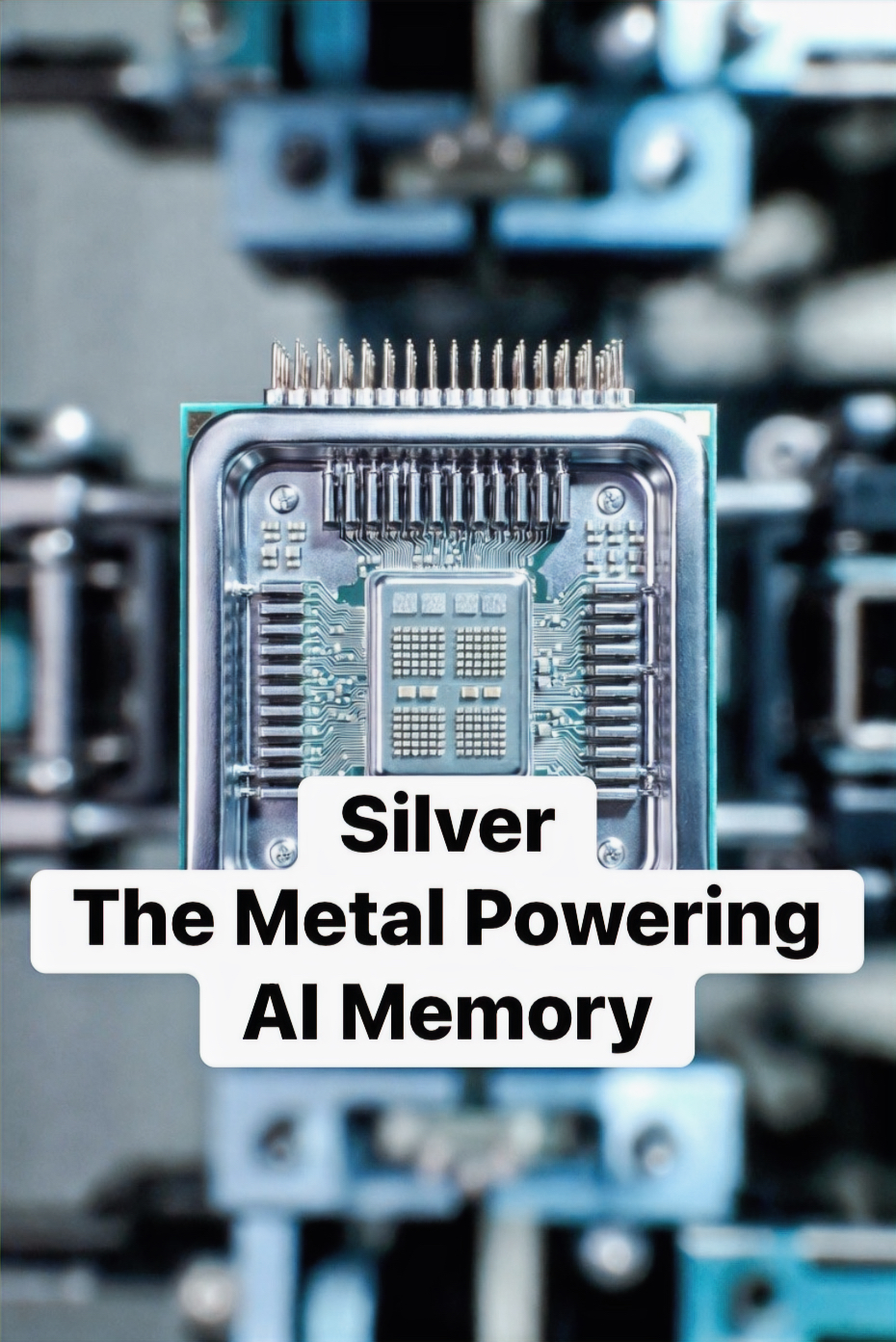
Semiconductors, including memory chips used in AI accelerators and data centres, frequently incorporate silver in interconnects and packaging where high conductivity is essential. As memory technologies evolve to support greater data throughput and reliability, silver remains a material of choice in multiple layers of the manufacturing process.
Memory Technology and High-Performance Computing
AI workloads are heavy on memory usage. Training large AI models and running advanced inference tasks require fast, high-density memory and efficient data pathways between processors and storage. This infrastructure places heavy demands on materials that can handle high electrical loads and rapid heat exchange.
In AI servers:
- Silver-plated connectors and bus bars help distribute high volumes of current with minimal loss
- Silver-enhanced thermal interface materials assist in cooling chips
- Advanced memory modules and GPUs use silver-based interconnects to preserve signal integrity
Data centres that host these systems also rely on silver-enhanced components in power distribution and cooling systems. Some estimates suggest that large AI data facilities — housing tens of thousands of servers — require hundreds of kilograms of silver each to maintain reliable performance.
The Scale of Industrial Demand
- Industrial applications account for roughly 55–60% of total silver demand
- Electronics and electrical usage consume hundreds of millions of ounces annually
- Semiconductor packaging alone accounts for thousands of tonnes of silver consumption globally
This growing industrial use reflects broader structural shifts in how computing infrastructure is built, especially as AI adoption accelerates.
Structural Shifts and Market Dynamics
A Supply-Demand Imbalance
Silver supply has struggled to grow at the same pace as demand. Mine production and above-ground stocks have not kept up with expanding industrial use, particularly in electronics and renewable energy sectors.
Unlike materials that can be easily substituted, silver’s combination of conductivity and thermal properties makes it difficult to replace in many high-performance applications.
Broader Industrial Context
- Solar photovoltaics: Silver paste is used in the front contacts of solar cells
- Electric vehicles: EVs require silver in sensors, contacts, and charging infrastructure
- 5G and communication networks: Silver supports high-frequency signal transmission
These factors highlight how silver is increasingly a material of digitalisation and electrification.
What This Means for Technology Awareness
Understanding silver’s role in modern computing helps illuminate broader trends in how digital infrastructure is built and scaled. Silver represents a vital material that supports performance, reliability, and thermal management in advanced systems such as AI accelerators and memory arrays.
Financial Disclaimer
Disclaimer: This article is for educational purposes only and does not constitute financial or investment advice. Always conduct your own research before making financial decisions.
Call to Action
If you value clear, long-term thinking about technology, infrastructure, and modern computing, follow us on Facebook and
Instagram for more insights.
It’s more than money, it’s a lifestyle.
This guide is general education, not financial advice. Investments can fall as well as rise. If you are unsure, speak to a regulated financial adviser.